
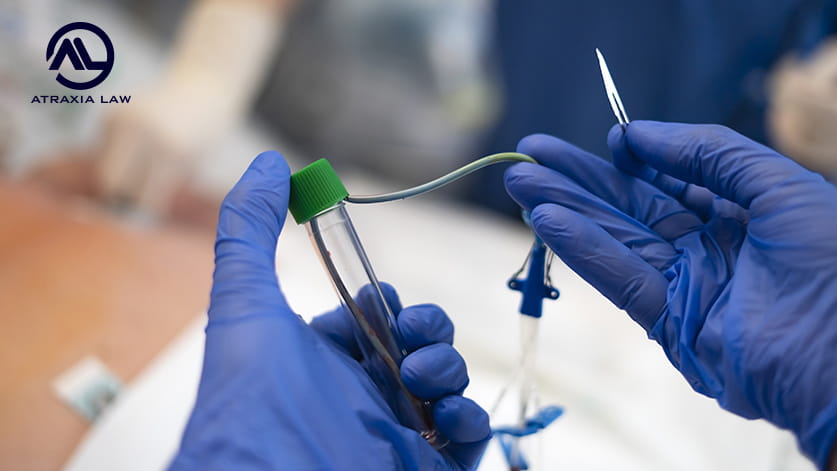
If you or a family member experienced serious complications from a Bard implantable port catheter, you may be eligible to file a legal claim. Atraxia Law assists patients who have suffered injuries from device failures, including catheter fractures, infections, blood clots, and cardiac complications. Recently, a federal court denied the manufacturer’s motion for summary judgment, leaving design defect, failure to warn, and punitive damages claims intact.
Port catheters are small medical devices implanted beneath the skin and connected to a catheter that enters a major vein. These devices deliver chemotherapy, IV medications, nutrition, or long-term treatments. While ports are designed to remain in the body for extended periods and reduce the need for repeated needle sticks, serious complications have emerged that require emergency surgery and additional hospitalization.
To qualify for litigation, an injured patient must meet specific clinical and procedural requirements:
Central to port catheter litigation is the argument that these devices were defectively designed, built with materials that wear down, not sufficiently tested for long-term implantation, and put on the market without fair warnings about fracture risks. Some plaintiffs go further, alleging that manufacturers had reason to know about the risk of failure but continued selling the devices.
The federal MDL in Arizona now includes over 3,200 active cases against manufacturer C.R. Bard. In a major ruling, Judge Campbell officially denied the defendant’s motion for summary judgment, preserving the viability of claims of design defect, failure to warn, fraudulent misrepresentation, fraudulent concealment, consumer fraud, unlawful trade practices, and unjust enrichment.
Most critically, the court denied summary judgment on punitive damages. The court specifically embraced the coatings theory of injury, finding that evidence about Bard’s uncoated IPCs is sufficient to support a finding of substantial danger to the public. The court noted that a jury could reasonably find that Bard exhibited deliberate indifference to patient safety by continuing to market the devices when it had affordable options to reduce the risk.
Patients injured by a faulty port catheter may have grounds to seek compensation for the cost of treating complications, any follow-up procedures the failure required, pain and suffering, income lost during recovery, and lasting effects on their health. Permanent injuries and deaths can lead to significantly larger damages and wrongful death claims.
Several types of device failures have been documented in litigation and reported to medical device regulators. Understanding these failure modes helps patients recognize whether they may have a viable claim.
Complications from a failing port catheter can include internal bleeding, heart injury, pulmonary embolism, infection, sepsis, and damage to nerves or blood vessels. In serious cases, open surgery may be needed to remove device fragments or address life-threatening problems.
Patients should seek immediate medical evaluation if they experience any of these warning signs:
When these symptoms appear, they may point to something serious that needs urgent care. It can be especially dangerous for cancer patients, whose bodies are already under stress from chemotherapy, to wait too long to treat cardiac complications or infections in the port.
Port catheter complications hit hardest in patients who are already seriously ill. Those undergoing chemotherapy are especially vulnerable because their immune systems are already greatly compromised. Those on long-term IV therapy rely on their port working properly to receive treatment. And when a port becomes infected or contaminated, a compromised immune system simply can't fight back the way a healthy one would.
For these patients, port failure is not a temporary setback, but can delay vital treatment and worsen their overall condition. A cancer patient might have to suspend chemotherapy so he or she can recover from emergency surgery to remove a fractured device. A patient on IV nutrition risks serious malnutrition if their port stops working.
If a port catheter caused you serious complications that required surgery, you may have grounds to take legal action against the manufacturer. Atraxia Law has spent over 35 years evaluating product liability and medical device claims for patients harmed by defective or poorly labeled devices.
We'll look at your medical records and device history to see where you stand with the federal MDL litigation. If you prove to be eligible, we will connect you with attorneys experienced in faulty medical device cases to help you pursue compensation. Contact Atraxia Law today for a free, confidential case evaluation.
10 Minutes Over the Phone
*No fees unless compensation is obtained